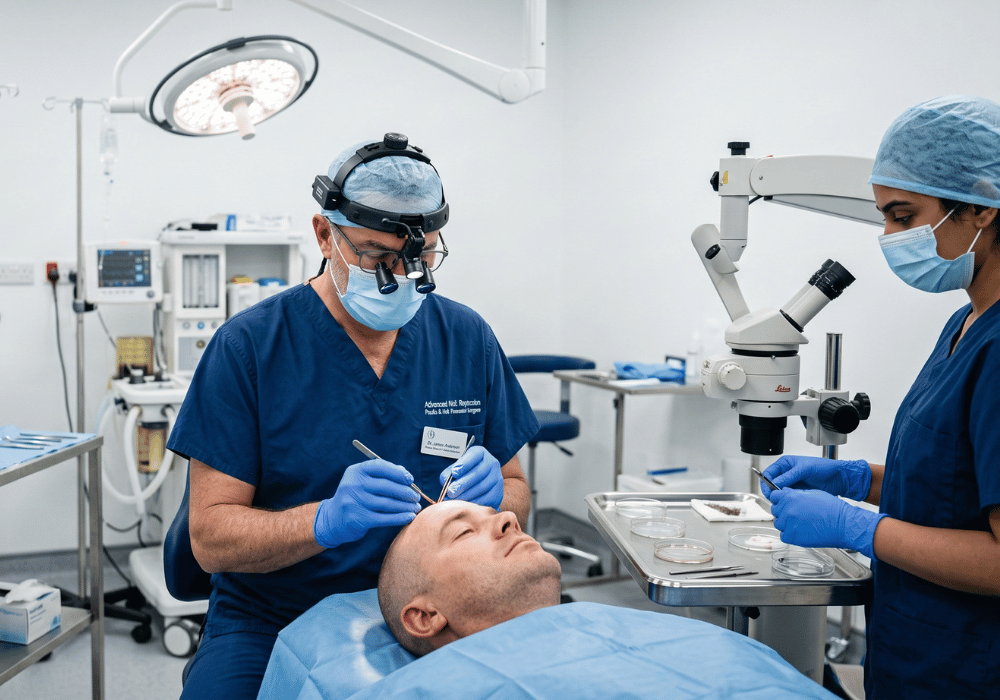

If the phrase “twilight sedation” makes you picture being half-awake while watching your own nose surgery unfold, well let us educate you a little. Simply put, that is not the goal.
Twilight sedation for rhinoplasty uses medications delivered through an IV to put you into a deeply relaxed, sleepy state while your surgical team gets to work. Many patients remember little or nothing about the surgery itself.
So, while you technically aren’t under general anesthesia this isn’t exactly the medical equivalent of casually dozing on the couch.
What Happens Before You Get Sleepy?
First off, your surgical team will review your medical information, check your vital signs, start an IV, and prepare you for surgery.
Once sedation medication is given, patients generally become relaxed and drowsy fairly quickly. The depth of conscious sedation can be adjusted as needed, which is one of the reasons “twilight” isn’t a particularly precise description of how every patient experiences it. There’s a scale.
Local anesthesia is also used around the surgical area to control pain.
What you personally remember can vary. Some patients may recall snippets from before or after surgery. Others remember getting comfortable and then seemingly jumping ahead in time to recovery.
Will You Feel Anything During Twilight Sedation for Rhinoplasty?
You shouldn’t expect to lie there feeling your rhinoplasty being performed.
Sedation and local anesthesia work together to keep you comfortable. Your surgical team monitors your response throughout the operation and can adjust medications when necessary.
That said, no surgeon can promise that every person will experience sedation identically. People respond differently to medications, which is why your medical history and previous experiences with anesthesia or sedation matter.
Tell your surgeon about medications and supplements you take, medical conditions, allergies, and any previous problems with anesthesia. This is not information to casually remember when you’re already wearing a surgical gown.
And if the idea of being technically conscious still makes you nervous? Say so. Anxiety about anesthesia is hardly unusual.
Why Use Twilight Sedation for Rhinoplasty in DC?
Not every rhinoplasty requires the same anesthesia plan, but IV sedation can offer advantages for appropriately selected patients.
At The Center for Cosmetic Surgery in Washington, DC, Dr. Steven B. Hopping routinely performs rhinoplasty as an outpatient procedure under IV sedation. Patients receive their surgery in the practice’s private, AAAHC-accredited surgical facility rather than automatically going to a hospital operating room.
IV sedation avoids some aspects of general anesthesia while still allowing patients to remain deeply relaxed during surgery.
Recovery from sedation may also be relatively quick, although “quick” does not mean you’re driving yourself home and stopping for groceries afterward.
You’ll need a responsible adult to take you home and follow the postoperative instructions provided by your surgical team. Grogginess after sedation is normal, so your schedule for the rest of the day should be impressively boring.
What Happens When You Wake Up?
The first thing you notice probably won’t be your new nose.
There may be a splint in place along with swelling, stuffiness, or bruising around the nose and eyes. Those are parts of rhinoplasty recovery, not necessarily effects of IV sedation.
You may feel sleepy or slightly foggy as the medication wears off. Your surgical team will monitor you during the initial recovery period before you’re cleared to leave with your designated ride.
Twilight sedation for rhinoplasty can sound strange if you’ve never experienced IV sedation before. In practice, most of the excitement belongs to your surgical team. Your job is largely to get comfortable, get sleepy, and let them handle the rest.
Considering rhinoplasty in Washington, DC? Call 202-785-3175 or request an appointment online and start your journey toward natural-looking results with a specialist you can trust.