Nobody researching a hair transplant is hoping to trade thinning hair for an obvious scar across the back of the head.
That’s one reason the FUE-versus-FUT debate is a common one amongst those looking for a hair transplant. If you’re comparing FUE or FUT hair transplant in DC, FUE generally has the advantage when avoiding a noticeable linear scar is the priority. But FUE isn’t a completely a scarless endeavor.
Any procedure that removes hair follicles through the skin leaves some degree of scarring. The real difference is what those scars look like and how noticeable they may be once everything heals.
Why FUT Can Leave a Linear Scar
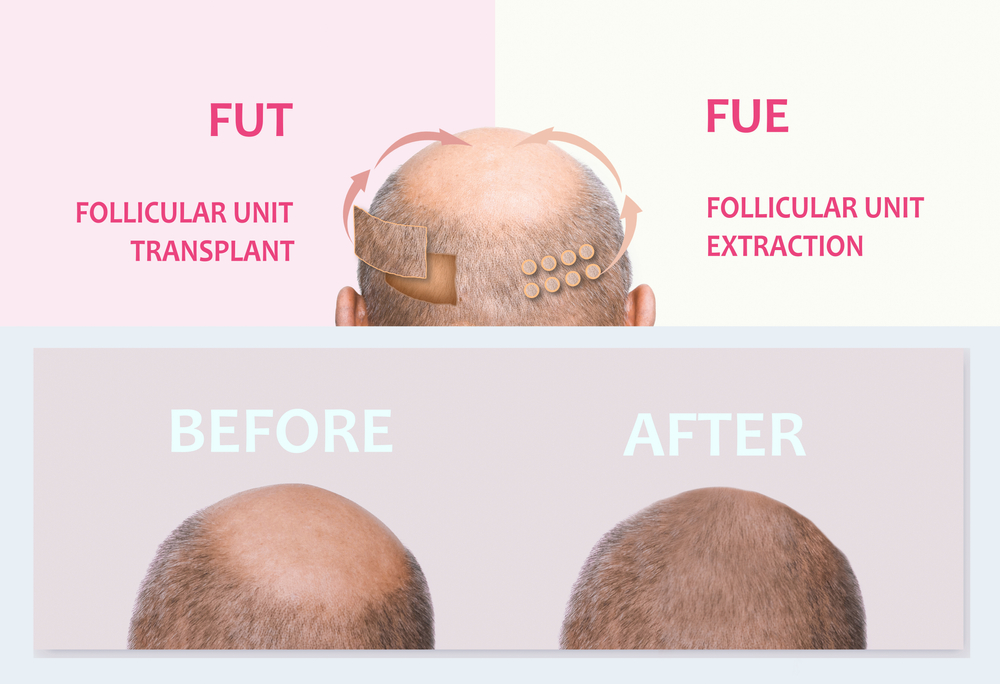
FUT stands for follicular unit transplantation, sometimes called the strip method.
With FUT, the surgeon removes a narrow strip of scalp from the donor area, usually at the back of the head. Individual follicular units are then separated from that tissue and transplanted into areas experiencing hair loss.
The donor area is closed, leaving a linear scar.
For someone who consistently wears longer hair, that scar may remain well concealed. Start cutting your hair very short, though, and camouflage becomes more challenging.
FUT can still be appropriate for certain patients and may allow a large number of grafts to be harvested. Scarring is simply part of the tradeoff that should be discussed before surgery.
Does FUE Really Mean No Scar?
Here comes the fine print.
FUE, or follicular unit extraction, removes individual follicular units rather than an entire strip of scalp. That eliminates the long linear incision associated with FUT.
Instead, FUE creates numerous tiny extraction sites throughout the donor area. Once healed, they can leave small dot-like scars that are typically spread across a wider area.
So FUE means no linear scar. It does not mean someone discovered a loophole allowing surgery to occur without disturbing the skin.
For patients who prefer shorter hairstyles, those small dispersed scars may be considerably easier to conceal than an FUT scar.
Choosing FUE or FUT Hair Transplant in DC
Scarring deserves consideration, but don’t let it become the only thing you compare.
Your degree and pattern of hair loss matter. So does donor density, hair texture, scalp characteristics, the number of grafts needed, and how you normally wear your hair.
Then there’s the part that gets surprisingly little attention: who is actually performing the procedure.
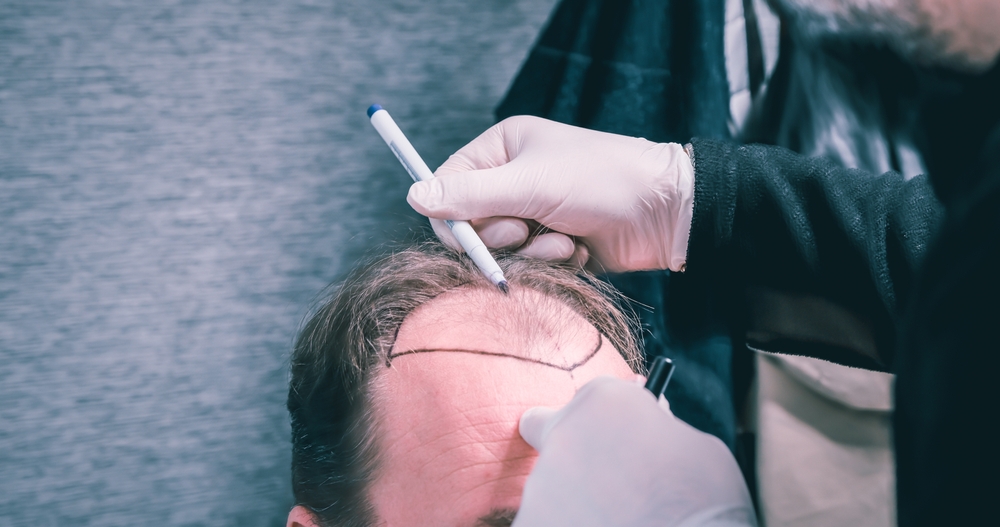
Hair transplantation isn’t simply about relocating the maximum number of follicles from Point A to Point B. Hairline design, graft placement, direction, angle, and density all influence whether the finished result looks natural.
A technically successful transplant with a strangely drawn hairline isn’t much of a victory.
At The Center for Cosmetic Surgery, quadruple board-certified surgeron Dr. Steven B. Hopping, evaluates hair restoration as part of an individualized treatment plan rather than treating every case of hair loss identically.
Ready to Make a Decision?
Here are the simple facts. FUE avoids the single linear donor scar produced by FUT and instead leaves small, scattered extraction scars. For someone who likes wearing their hair short, that can be a meaningful difference.
But don’t choose a hair transplant technique from a scar comparison alone. The bigger goal is having enough hair left in the right places, and making sure what gets moved actually looks like it belongs there.
Call 202-785-3175 or request an appointment online with Dr. Hopping and discuss which approach fits your hair loss, donor area, and goals.