
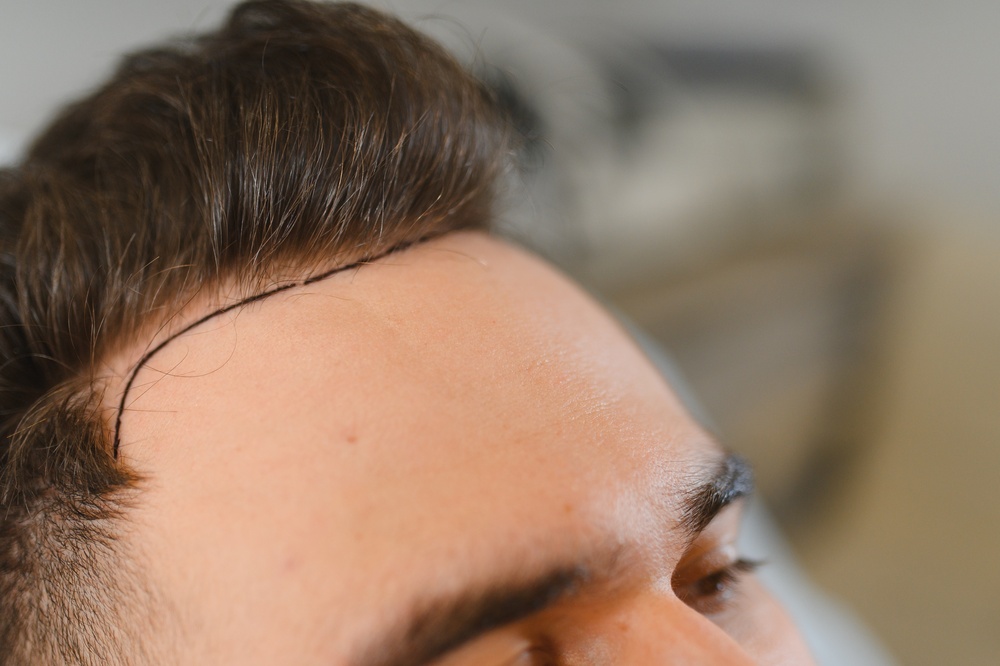
A changing hairline doesn’t automatically mean you’re losing your hair. For many people – especially men – a mature hairline is a completely normal part of aging.
The challenge is knowing when a receding hairline is simply maturing and when it’s a sign of progressive hair loss that deserves professional evaluation.
Understanding the difference can help you make informed decisions before significant hair loss occurs.
What is a Mature Hairline?
A mature hairline is a natural shift that commonly occurs between the late teens and early 30s. As the face continues to develop, the juvenile hairline gradually moves slightly higher, usually creating a subtle “M” shape at the temples while remaining relatively even across the forehead.
Unlike pattern baldness, a mature hairline generally stabilizes after this change. Hair density behind the hairline remains healthy, and you don’t continue seeing rapid thinning or widening areas of the scalp.
Many people mistake this completely normal transition for permanent hair loss, creating unnecessary anxiety.
When Is It More Than a Mature Hairline?
While a mature hairline is normal, progressive hair loss follows a different pattern.
If your hairline continues moving backward year after year, your temples become increasingly recessed, or the crown of your scalp begins thinning, hereditary hair loss may be the cause.
You may also notice increased shedding during washing or styling, finer hairs replacing thicker strands, or more visible scalp in bright lighting.
Hair loss isn’t always genetic, either. Hormonal changes, nutritional deficiencies, certain medications, autoimmune disorders, stress, and scalp conditions can all contribute to thinning hair.
That’s why self-diagnosing based solely on online photos often leads to confusion.
How Can a Hair Specialist Tell the Difference?
An experienced hair restoration specialist evaluates much more than your hairline.
Your consultation includes a detailed medical history, family history of hair loss, scalp examination, and assessment of hair density, follicle health, and overall growth patterns.
In some cases, laboratory testing may be recommended to identify medical conditions contributing to thinning hair.
This comprehensive evaluation helps determine whether you’re experiencing a mature hairline, androgenetic alopecia, temporary shedding, or another form of hair loss altogether.
An accurate diagnosis is the foundation for successful treatment.
What Are Your Treatment Options?
If your hairline has simply matured, treatment may not be necessary at all.
However, if early hair loss is identified, several options may help slow progression and preserve existing hair.
Depending on your diagnosis, your provider may recommend prescription medications, topical therapies, platelet-rich plasma (PRP), low-level laser therapy, nutritional support, or other evidence-based treatments.
For individuals with more advanced hair loss, hair transplantation may provide a permanent solution by relocating healthy follicles from areas of greater density to thinning regions.
The right approach depends on your age, pattern of hair loss, long-term goals, and overall scalp health.
Why Early Evaluation Matters
Hair restoration is often most successful before significant follicle loss occurs. Once hair follicles become permanently inactive, treatment options become more limited.
Seeking an evaluation early doesn’t necessarily mean you’ll need immediate treatment. In many cases, it simply establishes a baseline so future changes can be monitored over time.
Knowing what’s happening gives you peace of mind and allows you to make proactive decisions rather than reactive ones.
Find Answers From Experienced Hair Restoration Specialists
If you’ve been wondering whether your changing hairline is simply maturing or if you’re experiencing true hair loss, you don’t have to keep guessing.
At the Center for Cosmetic Surgery, our experienced team provides comprehensive hair restoration evaluations designed to identify the cause of your hair concerns and recommend personalized solutions based on your goals.
If you’re researching hair transplant surgeons in Washington, DC, request a consultation online with Dr. Steven B. Hopping at the Center for Cosmetic Surgery or call 202-785-3175 to and take the first step toward understanding your hair – and your options – with confidence.